Beyond Excellence: In Search of Exceptionalism
- Conrad Pearlman

- May 7, 2025
- 2 min read
Building off last month’s post on In Search of Excellence which reflected on the groundbreaking book that defined management thinking 40 years ago—and still resonates today—No Baselines takes the conversation further. In Search of Excellence set a generation of leaders on a path of benchmarking, best practices, and operational rigor. Inspired by that foundation, No Baselines seeks to reimagine the pursuit—not through measurement and benchmarks—but through a search for exceptionalism.
Think of it as an American Idol–style search format but applied to organizations: a way to spotlight creativity, authenticity, and the refusal to accept limits. The goal is not to find who meets the baseline, but who transcends it. Exceptionalism is not about outperforming a standard; it’s about refusing to accept that a baseline even exists. It is about designing experiences that feel singularly unreplicable and memorable.
The first field I turn to is hospitality. This is where I first felt exceptionalism: the difference between service that is efficient and service that is unforgettable. Also, I am personally fascinated by this industry and seek to better understanding which firms have successfully applied the no baselines approach to exceptionalism.
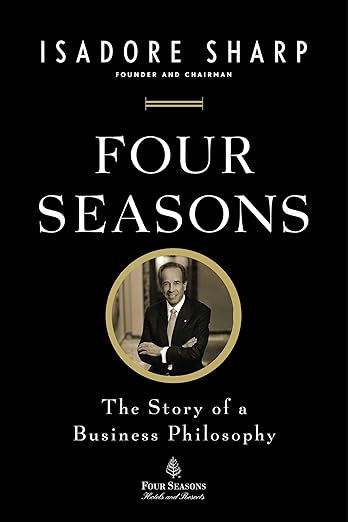
Apple’s Steve Jobs once said design is not about how something looks, but how it works. Similarly, Isadore Sharp at Four Seasons built a philosophy of service on a deceptively simple truth: “We are only what we do, not what we say we are.”What makes Four Seasons exceptional is that it never reduced service to a checklist. Sharp’s vision was not about luxury as marble lobbies or thread count; it was about creating an atmosphere where guests feel genuinely cared for—where staff are empowered to act with empathy, not just efficiency. A housekeeper noticing a guest’s reading glasses left open on a desk and returning later with a small cloth to clean them. A concierge who remembers not just a name but a story. These moments cannot be standardized into a manual; they are born of a culture where employees are trusted to use judgment and humanity.
This is exceptionalism in action:
Authenticity over scripts—every guest interaction should feel personal, not rehearsed.
Empowerment over policy—employees are trusted to do what feels right, not just what rules allow.
Connection over transaction—the goal is not satisfaction, but emotional resonance.
Four Seasons shows that hospitality at its best isn’t about efficiency or even excellence. It’s about the courage to design experiences that can’t be replicated anywhere else.
This isn’t about perfection. It’s about the pursuit of exceptionalism without baselines.